
 Featured
Loading page…
Tretinoin is a prescription topical retinoid for acne. It supports skin-cell renewal and helps prevent blocked pores, blackheads, whiteheads and new spots. Compare tretinoin products by strength, formulation, manufacturer, pack size and prescription requirements. The right option depends on acne severity, skin sensitivity and a clinician’s assessment.
Featured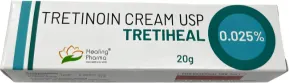
Tretinoin cream is a vitamin A derivative applied to the skin. It increases cell turnover and helps prevent dead cells from blocking hair follicles, improving comedonal and inflammatory acne over time.
Tretinoin does not clear acne overnight. Spots can appear worse during the first few weeks, and definite improvement commonly requires several weeks.
There is no single best tretinoin cream for acne. A prescriber considers acne type, skin sensitivity and previous treatments before choosing a strength and formulation.
Lower-strength creams may be easier for sensitive or dry skin to tolerate. Stronger concentrations are not automatically better and may cause more irritation. The best choice is a suitable formulation that can be used consistently under professional guidance.
The usual labelled tretinoin cream dosage for acne is a thin layer once daily in the evening. About a pea-sized amount is generally enough for the entire acne-affected facial area, but follow the prescription.
A clinician may advise a slower start for sensitive skin. Using extra cream or applying it more often increases irritation without clearing acne faster.
For people asking how to use tretinoin cream, product instructions come first. General steps include:
Wash with a mild, non-medicated cleanser and pat the skin dry.
Let the skin dry completely; some labels advise waiting 20–30 minutes.
Apply a small amount in a thin layer over the entire acne-affected area, not only individual spots.
Keep it away from the eyes, lips, corners of the nose, open wounds, sunburn and eczematous skin.
Wash the hands afterward and use a non-comedogenic moisturiser if needed.
Apply broad-spectrum sunscreen during the day and limit unnecessary sun or sunlamp exposure.
The best way to use tretinoin cream for acne is consistently as prescribed with a gentle skincare routine. Correct tretinoin cream usage matters more than quantity.
Common tretinoin cream side effects include:
Dryness, peeling or flaking
Redness, warmth or stinging
Burning, itching or tenderness
Increased sensitivity to sunlight
Temporary worsening of acne early in treatment
Avoid harsh scrubs, astringents and alcohol-based products. Benzoyl peroxide, salicylic acid and other active treatments can increase irritation; ask whether their application times should be separated.
Contact a healthcare professional for persistent or severe irritation. Seek prompt help for blistering, marked swelling, crusting or an allergic reaction.
People researching hydroquinone mometasone and tretinoin cream side effects should know this combination is generally intended for selected pigmentation conditions, such as melasma, where authorised. It is not a standard acne treatment or everyday facial cream.
Possible effects include burning, dryness, peeling and redness. Prolonged or unsupervised facial use of mometasone can cause skin thinning, visible vessels, colour changes, steroid acne, rosacea-like reactions, infection and hormonal effects. Prolonged hydroquinone use can rarely cause persistent blue-black discolouration.
Use this combination only for the condition and duration prescribed by a dermatologist. Do not substitute it for plain tretinoin cream.
Avoid tretinoin during pregnancy or while trying to conceive unless a clinician determines it is appropriate. Disclose pregnancy, plans to conceive or breastfeeding.
Discuss eczema, sunburn, very sensitive skin and all prescription or cosmetic products before treatment.
Avoid waxing and other irritating procedures on treated areas unless a professional advises otherwise.
Do not apply oral isotretinoin capsules to the skin or combine retinoid treatments without medical direction.
Store the medicine as labelled and keep it away from children.
Tretinoin
Some improvement may appear after a few weeks, but definite benefit can take six weeks or longer. Seek a review for severe symptoms or no improvement.