
 Featured
Loading page…
Minoxidil comes in topical hair-loss products and prescription tablets. Oral minoxidil is approved for severe high blood pressure, while its use for hair loss is off-label and requires medical supervision. Compare minoxidil products by formulation, strength, manufacturer, pack size and prescription status.
Featured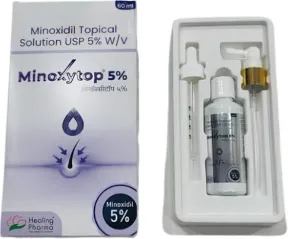
Minoxidil is a vasodilator that widens blood vessels. It was developed for difficult-to-control high blood pressure. Increased hair growth during treatment led to topical products for hereditary hair loss.
Its exact hair-growth mechanism is not fully understood. It may support follicles and extend the active growth phase.
Minoxidil for hair loss is mainly used for male or female pattern hair loss. It may slow loss and promote some regrowth, but results vary.
Sudden shedding, patchy bald spots, an inflamed scalp or hair loss without a known cause should be assessed before treatment.
Improvement usually requires consistent use for several months. Early shedding can occur, and continued treatment is normally needed to maintain benefits.
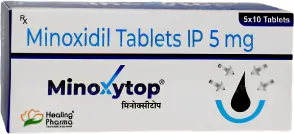
Minoxidil tablets are prescription medicines for severe hypertension and carry important cardiovascular warnings. Dermatologists may prescribe low-dose minoxidil pills off-label for selected hair-loss patients.
Using minoxidil pills for hair loss requires professional assessment and monitoring. Never use blood-pressure tablets for hair growth without a prescription or take a dose intended for another person.
The search “oral minoxidil vs topical which is more effective” has no universal answer. Topical minoxidil is approved for pattern hair loss and acts mainly on the scalp. Oral treatment exposes the whole body.
Both approaches can help some patients, but oral treatment is not universally superior. Selection depends on diagnosis, scalp sensitivity, blood pressure, heart health and medicine interactions.
Possible minoxidil side effects depend strongly on the formulation. Topical products mainly cause local scalp effects. Oral tablets can affect blood pressure, heart rate and fluid balance throughout the body.
Stop treatment and seek prompt medical advice for chest pain, fainting, a rapid or irregular heartbeat, sudden unexplained weight gain, swelling of the hands or feet or difficulty breathing.
When comparing topical vs oral minoxidil side effects, topical treatment is less likely to cause whole-body effects because only a small amount is usually absorbed.
Possible topical effects include:
Scalp itching, redness, burning or dryness
Flaking or contact dermatitis
Temporary increased shedding
Unwanted facial or body hair if the product spreads beyond the scalp
Headache or dizziness in some users
Apply topical minoxidil only to a healthy scalp and wash the hands after use. Avoid contact with the eyes and other sensitive areas.
Possible oral minoxidil side effects include:
Excess facial or body hair
Ankle swelling and fluid retention
Increased heart rate or palpitations
Dizziness or low blood pressure
Headache
Nausea
Weight gain caused by retained fluid
Rare but serious cardiovascular complications can occur, including worsening chest pain or fluid around the heart. These risks explain why tablets require a prescription and medical monitoring.
The phrase oral minoxidil side effects vs topical describes a choice between systemic and local risk. Oral tablets may avoid scalp irritation but can cause cardiovascular and fluid-related effects. Topical treatment usually has fewer systemic effects but can be difficult to apply consistently or may irritate the scalp.
Obtain a diagnosis before treating unexplained or sudden hair loss.
Tell the prescriber about heart disease, low blood pressure, kidney problems and swelling.
Share all blood-pressure medicines, diuretics and other treatments being used.
Do not apply topical minoxidil to infected, inflamed, sunburned or damaged skin.
Do not use more than directed because extra product does not speed hair growth.
Ask for medical advice during pregnancy or breastfeeding.
Keep every formulation away from children and pets.
Minoxidil
No. Response varies and complete regrowth should not be expected. Individual results cannot be predicted.